Imagine sitting in front of your computer, diving into an immersive digital world that springs to life, all without needing to fumble for those pesky 3D glasses. Welcome to the future of viewing—glasses-free 3D monitors, where the third dimension is crafted solely for your eyes without the encumbering fashion statement of those additional frames. Here, we’ll journey through how these marvelous pieces of technology work and how they bring visuals to life right on your desktop.
Glasses-free 3D monitors, also known as autostereoscopic displays, have opened a world where depth adds a new layer of interaction with digital content. At the heart of this technology is the concept of delivering different images to each eye, simulating the depth perception we experience in the natural world. Remember the old Magic Eye books that required you to unfocus your eyes to see a hidden image? This is somewhat similar but much more sophisticated and does not require you to unfocus your eyes.
One of the key technologies enabling glasses-free 3D is eye-tracking. Eye-tracking monitors are equipped with sensors that locate where your eyes are positioned relative to the screen in real-time. Imagine a pair of invisible artists constantly adjusting their paintbrushes as you move, ensuring that the right shades and angles fall perfectly in line with your viewpoints.
These sensors constantly gather data on where both your eyes are looking. Based on this information, the display adapts to send precisely tailored images to each eye. It's like having two personal movie projectors aiming slightly different scenes toward each eye. The brain then knits these slightly varied images together, creating a seamless three-dimensional view with depth and realism.
A fascinating aspect of these spatial displays is their reliance on parallax, the same principle we use, often unconsciously, when perceiving real-world depth. Have you ever noticed how the view through one eye differs slightly from the other? As you move your head side to side, objects in your field of vision shift their relative positions. This is the parallax effect, a phenomenon these monitors capitalize on by coordinating the images displayed to each of your eyes.
Now, without delving too deep into overly technical nitty-gritty, these monitors employ one of several methods to achieve their magic, such as lenticular lenses or parallax barriers. Lenticular lenses are tiny elongated lenses that direct left and right views. Think of it like a miniaturized topography sculpted right into the screen surface. Parallax barriers, on the other hand, are fine vertical lines that work in harmony with the display beneath, ensuring each eye catches the intended image.
Let’s not skip the role of computing power here, which is serious business. All this happens without any lag in your experience due to high-speed processors that manage the real-time changes on your screen. It’s akin to having a director behind the scenes swiftly calling the shots, orchestrating angles, and orchestrating the action so seamlessly that you, the viewer, remain blissfully unaware of the technical delicacies involved.
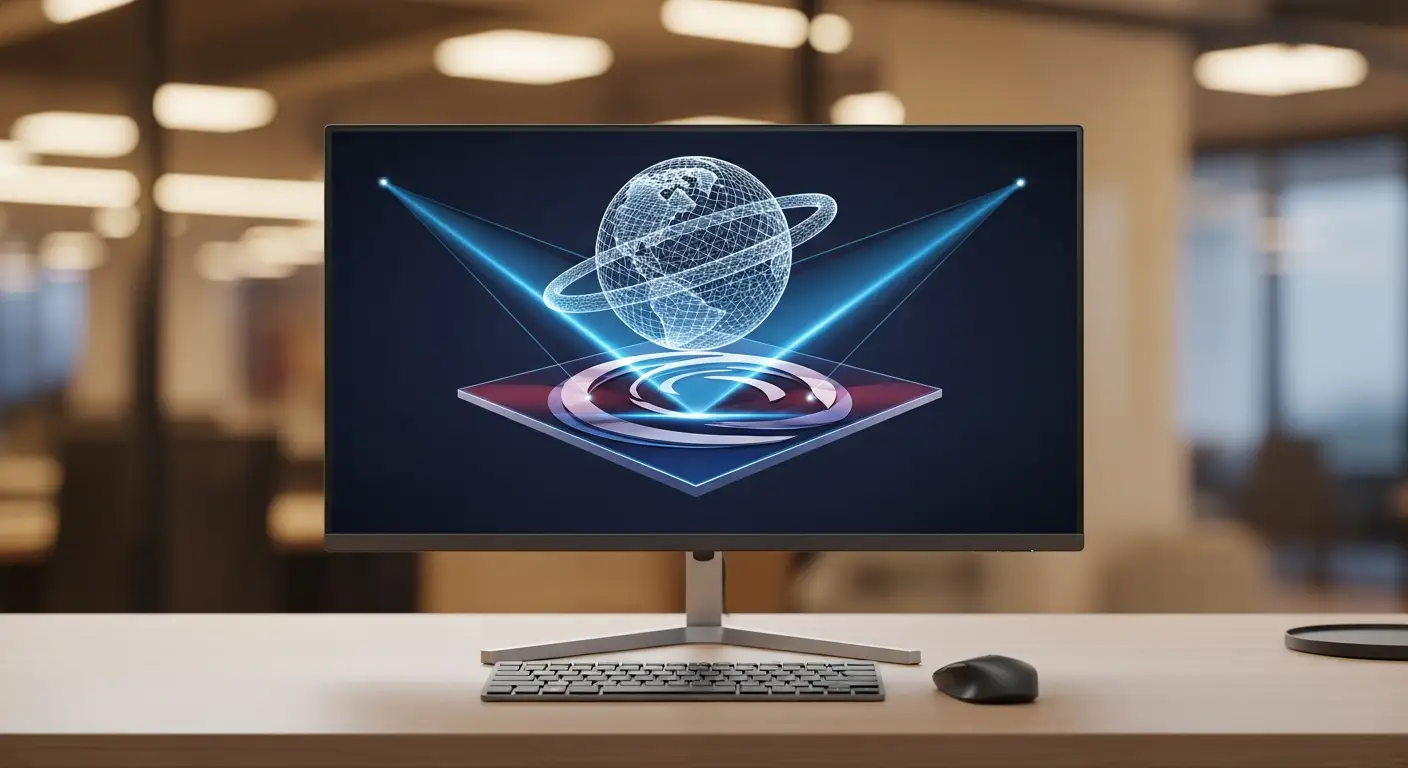
The novelty of this technology is not just its delivery of stunningly realistic interactive visuals; it's in how accessible it makes 3D content. Indeed, there’s an undeniable benefit in no longer needing specialized glasses, thereby reducing barriers to entry for users wanting a little more dimension in their daily browsing, gaming, or virtual meetings.
But, how might this impact our day-to-day? Imagine enhancing video calls where attendees appear as if they're sitting across from each other rather than a flat image. Or diving into a work presentation that leaps off the screen, not just as a series of numbers or slides, but a dynamic playground of graphs and diagrams hovering in mid-air.
Indeed, the gaming world stands to gain immensely, with the potential for environments that feel much larger and characters that spring off the screen. It opens up arenas of interaction where players can feel the full volume of a virtual sword from all angles. Even the mundane tasks, such as editing and reviewing 3D models or crafting new architectural designs, can find brand new efficiencies and inspiration through spatial visualizations.
Moreover, there's potential for an inbound wave of new forms of content creation specifically for these multidimensional displays. Imagine virtual art galleries or storytelling through holographically rich environments—media itself could soon morph away from the flat confines that have defined it since the moving image's inception.
While there's plenty to marvel at, it’s also important to keep expectations realistic. These 3D displays, although impressive, are still refining techniques to enhance smoothness across diverse viewing angles or adapting swiftly to multiple users. However, with advancements being made month to month, it’s clear this landscape of glasses-free 3D viewing is swiftly heading in promising directions.
In essence, glasses-free 3D monitors offer a taste of tomorrow. They promise a shift in how we consume digital content while unearthing fresh vistas of interaction. It’s an exciting domain where technology intertwines with our natural depth perception, creating a seamless blend of digital and reality. Whether you’re an avid gamer, a professional designer, or just a tech enthusiast, exploring the vibrant world conjured by these displays is bound to be an exciting ride—no glasses required.