In the fast-evolving landscape of wearable technology, consumers are finding more choices than ever to monitor their health, manage their communication, and integrate technology seamlessly into their everyday life. Two such trending options in this space are smart rings and smartwatches. Though both devices serve similar fundamental purposes, there are clear distinctions in their form factors, usability, battery life, and comfort that make them suitable for different kinds of users. If you're pondering which of these electronic companions might better suit your lifestyle, let's delve into their unique attributes to help with your decision-making process.
Starting with everyday usability, it's important to assess how each device integrates into the daily routine. Smartwatches have long been popular due to their multifunctionality and ease of interaction. With a larger display, users can easily read incoming notifications, view the time, track their steps, control music, follow GPS for directions, and sometimes even make calls directly from their wrists. This accessibility makes smartwatches an attractive choice for those who prefer having a convenient miniature computer on their arm, essentially acting as an extension of their smartphone.
Smart rings, although smaller and more discrete, offer a different kind of usability. Shaped like traditional rings, they are designed primarily for passive tracking of metrics such as steps, heart rate, and sleep patterns. Because they lack large touch screens, interactions are more limited, often requiring integration with a smartphone app to view detailed data. Despite this, the unobtrusive design makes smart rings an excellent choice for those who need minimal on-device interactions and prioritize discretion and passive data collection.
When considering battery advantages, both smartwatches and smart rings have their respective pros and cons. Smartwatches, with their larger screens and more complex functionalities, tend to have a varying battery lifespan depending on usage. Users may find themselves charging their device daily or every couple of days, especially if they're using GPS tracking or cellular features extensively. Recent advancements, however, have seen certain models optimizing power use to extend battery life beyond a couple of days.
Conversely, smart rings generally boast superior battery longevity due to their limited display and minimalistic design. Some models can last a week or more on a single charge. This makes them ideal for users who are looking for a maintenance-free experience when it comes to battery charging. However, smart rings might not offer the instant interaction that some might value, given their dependency on a connected smartphone for detailed feedback and alert notifications.
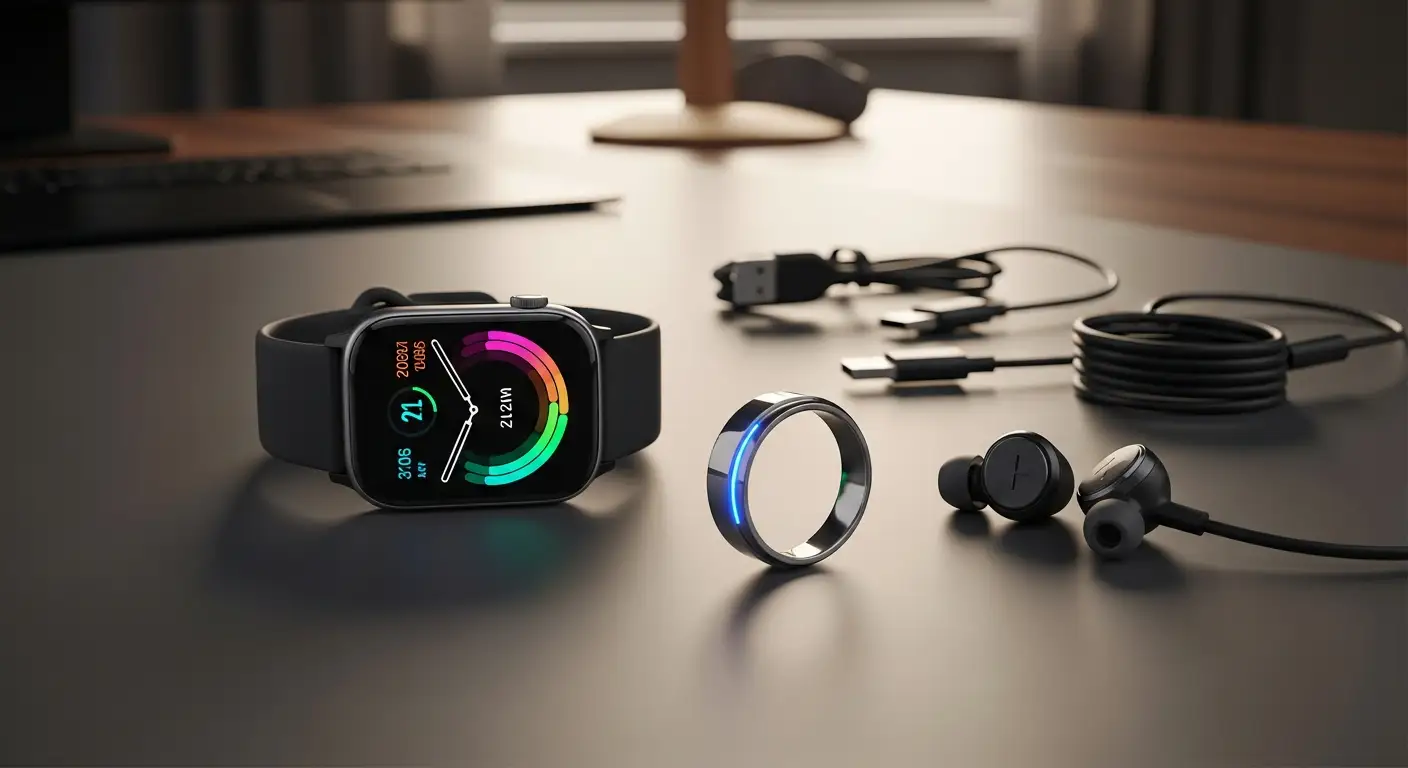
Comfort is another critical factor, especially for something worn constantly. Smartwatches usually come in a variety of sizes and styles, with adjustable wristbands to cater to different fits. Yet, the physical presence of a device on your wrist could be bothersome for those not accustomed to wearing watches, especially during activities like typing or sleeping. As a result, some users might find the weight and size of smartwatches a minor inconvenience over prolonged periods.
Contrastingly, smart rings offer a more lightweight and less intrusive experience. Often made from durable, comfortable materials like tungsten or ceramics, they're designed to fit around your finger snugly without drawing attention. This design makes them a comfortable choice for those unaccustomed to other types of jewelry or wrist-worn devices. However, sizing can be a challenge upon purchase, and users must ensure a good fit to take full advantage of the ring’s features.
In terms of personal style, smartwatches often provide more customizable options. Many offer interchangeable bands and customizable faces that can match an array of outfits or personal tastes. This allows users to adapt their smartwatch for both formal and casual occasions, offering a semblance of fashion alongside functionality.
Smart rings, with their more discreet design, might appeal to users seeking a more minimalist or professional look. There are fewer variations in terms of appearance, but their subtlety can be seen as an advantage for those who prefer a more uniform look without attracting much attention to their technology.
In conclusion, choosing between a smart ring and a smartwatch largely depends on personal lifestyle, usability priorities, and aesthetic preferences. Smartwatches arguably deliver more breadth in functionality and customization, while smart rings provide battery endurance and unobtrusiveness. Evaluating these differences in light of your daily needs can guide you toward the wearable that complements your personal and technological demands. Whether you prioritize an all-in-one wrist gadget or a subtle fitness companion, the ideal wearable ultimately aligns with your unique habits and preferences.