In the ever-evolving landscape of artificial intelligence, the integration of AI into physical spaces presents one of the most intriguing advancements. The concept of Physical AI refers to the intersection of artificial intelligence technologies and physical environments, where AI is deployed to interact with and control physical systems. This intersection is rapidly gaining traction as sophisticated AI systems become increasingly adept at navigating and manipulating the real world. Central to this evolution is the application of technologies like real-time sensor fusion and digital twins, which enable AI systems to effectively deploy in dynamic and unstructured environments such as automated warehouses or home facilities.
One of the most critical components of physical AI implementation is real-time sensor fusion. Sensor fusion refers to the process of integrating data from multiple sensors to produce more accurate, comprehensive, and reliable information. This process is essential for AI systems that must make real-time decisions in ever-changing environments. For example, in an automated warehouse, AI systems may collect data from cameras, LiDAR, infrared sensors, and microphones to generate a cohesive understanding of their surroundings. This synthesis of data enables AI models to detect obstacles, respond to changes, and coordinate their actions with precision.
Real-time sensor fusion facilitates enhanced perception capabilities, allowing AI systems to work more effectively and safely within dynamic environments. In a home facility, AI-equipped robots can navigate through rooms, avoid obstacles, and perform tasks such as cleaning or organizing. These robots must be able to perceive a range of variables, such as the presence of people, variances in lighting, or unexpected obstacles like pets or toys. By fusing data from multiple sensors, these AI systems gain a holistic awareness that single-sensor systems would lack, allowing them to make decisions that are both context-aware and timely.
Another significant innovative leap in the realm of Physical AI is the employment of digital twins. A digital twin is a virtual replica of a physical entity, system, or process that can be used to simulate, analyze, and optimize its real-world counterpart. The concept of digital twins has far-reaching implications, particularly when coupled with AI technology. By creating a digital twin of an environment or system, AI can predict and solve physical interaction challenges before deployment in the real world.
In industrial automation, digital twins are used to enhance the performance, safety, and efficiency of manufacturing processes. For instance, a digital twin of a warehouse could be used to simulate different layout configurations, inventory levels, and workflows to optimize the logistics operations. AI algorithms can analyze these simulations to recommend adjustments and improvements for real-world implementation. Similarly, in a smart home environment, digital twins may simulate energy consumption patterns, climatic conditions, or security scenarios to optimize the operation of HVAC systems or security protocols.
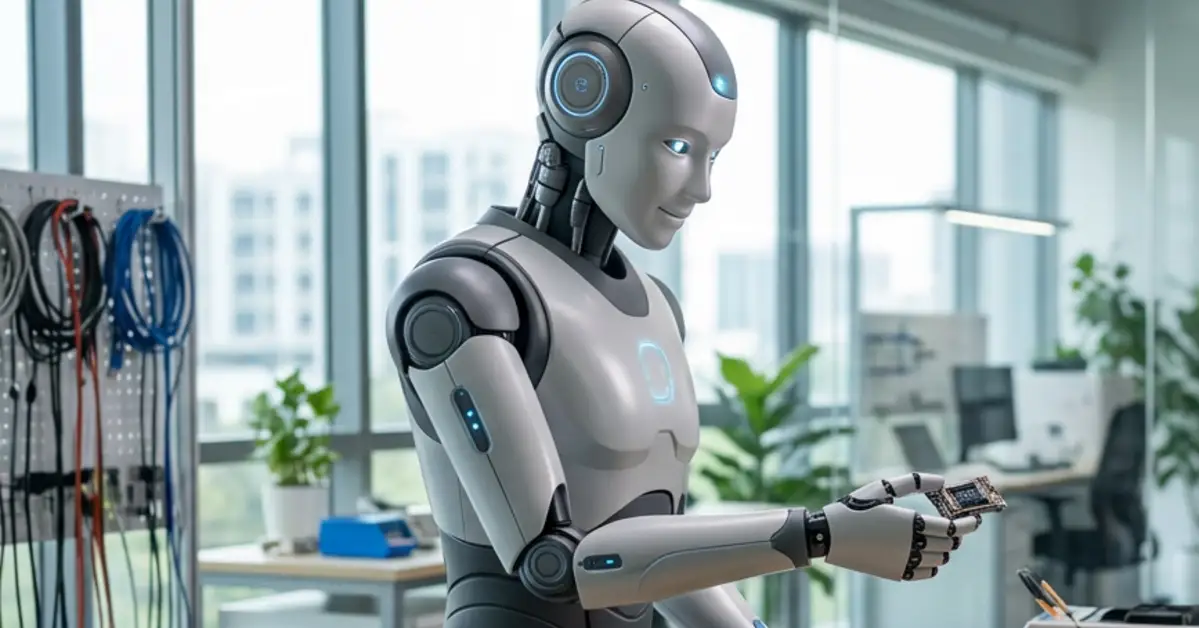
The synergy between real-time sensor fusion and digital twinning provides AI systems with a substantial edge in managing the complexities of physical environments. This is evident in how AI navigates automated warehouses, where efficiency, accuracy, and safety are of utmost importance. Here, AI systems integrated with sensor fusion technology can operate machinery such as robotic arms or autonomous vehicles by considering multiple data streams. Simultaneously, digital twins can be employed to project the impact of specific actions, accommodate real-time changes, and anticipate future system states, thus fostering a self-correcting and optimizing loop of interactions.
In home facilities, the practical applications of physical AI are becoming abundantly clear. Smart appliances, for instance, can leverage AI to learn user preferences, optimizing their operation for energy efficiency and performance. Robotic vacuum cleaners employ complex algorithms enabled by sensor fusion to map floor plans and clean homes without human intervention. Assistive robots use AI to interact safely with residents, providing support or companionship, demonstrating an adaptable interaction with the real-world environment.
The potential benefits of physical AI are numerous and multifaceted. It has the potential to revolutionize industries by enhancing productivity, augmenting human capabilities, and minimizing risks associated with hazardous environments. Additionally, the advances in AI decision-making capabilities foster innovations in autonomous systems and robotics, propelling further technological breakthroughs in sectors like logistics, healthcare, and consumer electronics.
However, as we continue to advance in this field, it is crucial to remain mindful of the technical, ethical, and safety considerations that accompany the integration of AI into physical spaces. Ensuring reliability in sensor fusion systems and maintaining the security and fidelity of digital twins are essential to building trust in AI applications. Moreover, addressing concerns regarding data privacy and ethical uses of AI will be necessary for societal acceptance and legitimate exploration of AI’s potential in physical domains.
As AI systems grow more sophisticated, the potential to influence the physical world will likely see unprecedented innovation. Research and development in areas like real-time sensor fusion and digital twinning are already charting new paths in creating AI systems capable of adapting and evolving within their operational environments. These technologies promise exciting new possibilities for improving day-to-day operations, industrial processes, and personal lifestyles. As Physical AI continues to mature, the fusion between artificial intelligence and the real world opens opportunities for intelligent decision-making architectures capable of seamlessly merging digital and physical realities.