In today’s rapidly evolving technological landscape, multi-agent AI systems have emerged as a fascinating area of study, drawing interest from both academic and industrial sectors. These systems involve the use of multiple software agents that work together to accomplish tasks that may be too complex for a single agent to handle efficiently. Understanding how these systems work offers insight into how they can be applied across various domains, including robotics, telecommunications, and distributed computing, among others.
A multi-agent system (MAS) is composed of multiple interacting intelligent agents that can be both homogeneous, meaning identical in function and structure, or heterogeneous, meaning they vary in these characteristics. Each agent in such a system is capable of performing specific tasks, making decisions based on its programming and environment input, and communicating with other agents in the system. This interaction is key to the system’s ability to solve complex problems that single-agent systems cannot address effectively.
The foundation of multi-agent AI systems lies in the concept of decentralization. Unlike traditional AI systems that rely on a central processor or decision-making entity, MAS distribute the processing work across all agents. This decentralization enhances the system's scalability, robustness, and flexibility. With no single point of failure, multi-agent systems can continue functioning even if one or more agents become non-operational or fail.
Coordination among the agents is a critical aspect of MAS. Each agent must have a well-defined role and strategy for interaction. This requires sophisticated algorithms that help in task allocation, resource sharing, and conflict resolution among agents. Through cooperative behavior, agents can achieve a shared goal or resolve conflicts that arise from diverging individual goals. Mechanisms such as negotiation, contract-net protocols, and voting systems are often employed in such systems to aid proper coordination.
Agents typically operate in environments where they have to make decisions based on partial perception. Each agent’s ability to perceive, act, and communicate makes the system more dynamic and adaptive. The agents can have proactive and reactive behaviors, responding to changes in the environment or the actions of other agents. Their decision-making capabilities are often grounded in AI techniques, such as rule-based systems, machine learning, evolutionary algorithms, and game theory.
Communication is another cornerstone of multi-agent systems. Agents need to share information efficiently to work collaboratively. This requires a well-defined communication protocol or language that ensures the reliable exchange of messages. Agent communication languages (ACL), such as KQML (Knowledge Query and Manipulation Language) and FIPA-ACL (Foundation for Intelligent Physical Agents ACL), provide structured formats for these interactions, allowing agents to ask questions, give answers, make requests, and provide support to their peers.
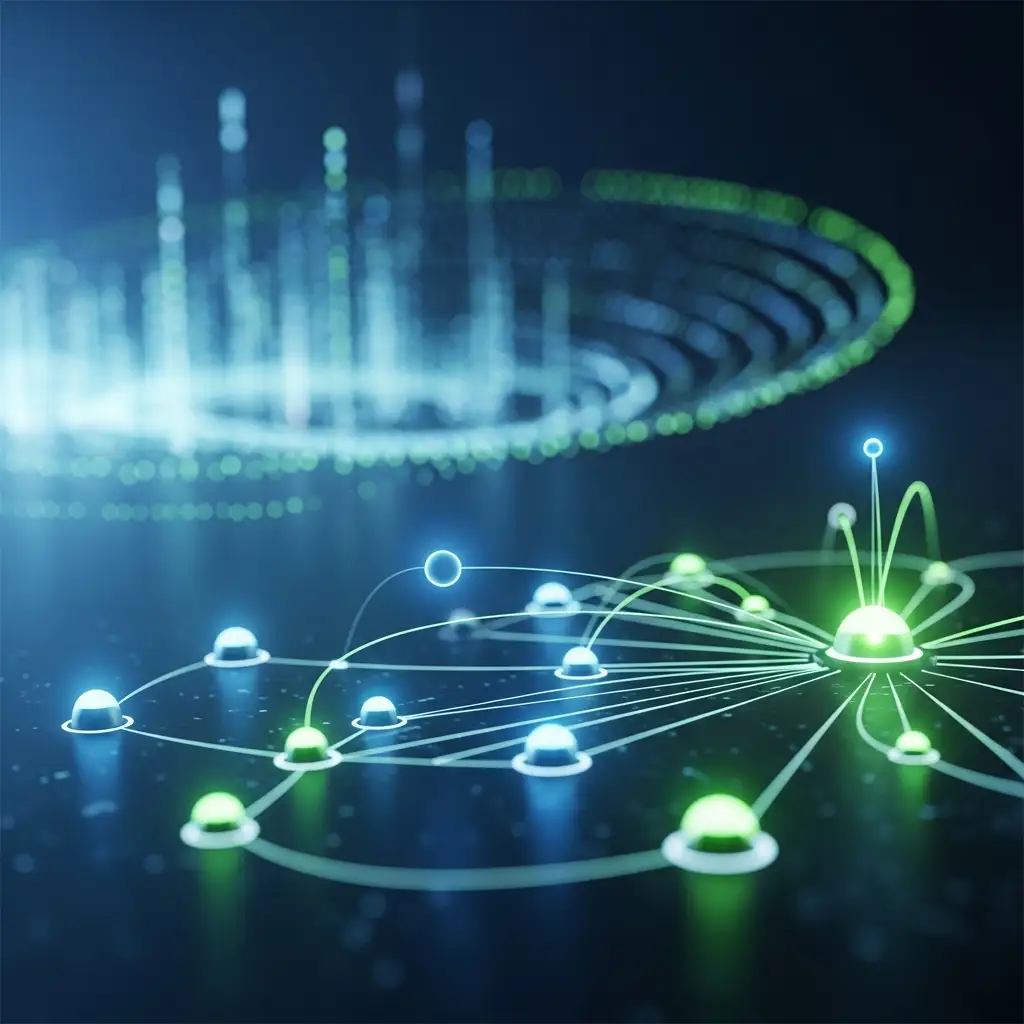
The various architectures in multi-agent systems are designed to foster cooperation. The blackboard architecture, for instance, allows agents to post information to and read from a shared common memory space, known as the blackboard. This open communication space helps coordinate tasks by enabling indirect communication among agents. Other architectures focus on market-based approaches where agents function as independent economic entities negotiating for resources and services.
Applications of multi-agent systems are vast and diverse, ranging from industrial automation to space exploration. In robotics, swarms of robots working in tandem bear resemblance to multi-agent systems, exemplifying how complex physical tasks can be effectively managed. In telecommunications, agents can monitor and manage network traffic to ensure efficient communications. In distributed computing, agents can help optimize the allocation of tasks across a network, balancing loads and preventing bottlenecks.
Security, reliability, and efficiency are paramount in the application of multi-agent systems. Given their potential to operate autonomously in critical applications, ensuring that these systems work correctly and safely under various conditions is essential. Techniques such as formal verification and validation processes are utilized to ensure that an agent’s behavior adheres to expected norms, and failsafe mechanisms are often incorporated to handle unforeseen failures or incorrect actions by agents.
Moreover, the integration of machine learning algorithms in MAS has opened new pathways for innovation. Machine learning aids agents in improving their performance over time through experience and adaptation, allowing them to handle exceptions and uncertainties better. Agents can be equipped with reinforcement learning capabilities, which enable them to learn optimal strategies through trial and error interactions within their environments.
Multi-agent systems also face challenges, including the difficulty of designing effective coordination mechanisms and ensuring efficient communication in complex and dynamic environments. The scalability of these systems, while a significant advantage, requires careful design considerations to ensure that increasing the number of agents does not lead to inefficiencies or conflicts. Further research is focused on overcoming these challenges through enhanced learning techniques, improved communication protocols, and advanced coordination strategies.
In conclusion, multi-agent AI systems represent an exciting frontier in artificial intelligence research and application. By leveraging the power of decentralized decision-making and coordination, these systems create new opportunities for addressing tasks that were once deemed too complex. As technology continues to develop, the role of multi-agent systems is likely to expand, driving innovation and creating new possibilities in numerous fields. Understanding the principles and dynamics of these systems is crucial for those engaged in the development and application of AI technologies, offering valuable insights into the potential of collaborative autonomous agents in our increasingly interconnected world.