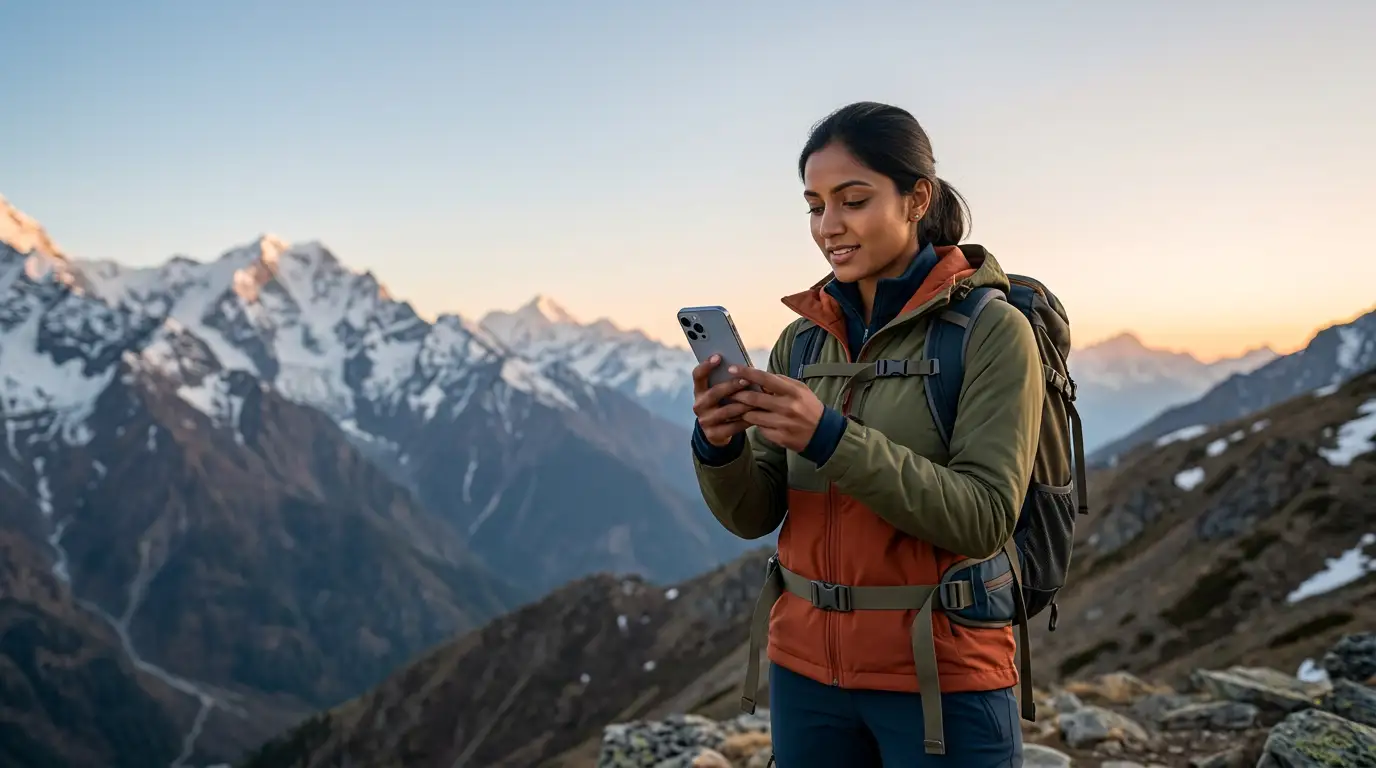
Imagine you're out hiking in the mountains or traveling to a remote area, and suddenly you realize that there is no cell service. This scenario can be concerning, especially if an emergency arises, and you find yourself unable to make a call or send a text. Thanks to advances in modern technology, there’s a way to stay connected even in places where your smartphone shows "No Service."
Modern smartphones are beginning to connect directly to low-earth-orbit (LEO) satellites, enabling users to send emergency messages even when there is no traditional cell coverage. This innovative approach is known as Direct-to-Cell technology. As companies launch constellations of satellites into low-earth orbit, they enable smartphones to communicate with these satellites to provide coverage worldwide, especially in areas that lack terrestrial cell towers.
Low-earth-orbit satellites are designed to operate closer to the Earth compared to traditional geostationary satellites. This proximity allows for faster data transmission and lower latency, which are crucial for effective communication. The satellites orbit at altitudes typically between 180 to 1,200 miles, providing greater network density and coverage.
To make use of Direct-to-Cell technology, it’s important to understand if your smartphone is compatible. Modern smartphone manufacturers are starting to integrate capabilities in their devices to allow communication with these LEO satellites. This development means your phone can switch from traditional cell networks to satellite networks seamlessly when needed.
If you're using a recent smartphone model, it’s a good idea to check whether your device supports Direct-to-Cell technology. You can usually find this information in your phone's user manual or the company’s website under product specifications. Your smartphone may also have a specific setting related to satellite communication.
Beyond hardware, you also need to ensure that your mobile plan supports this feature. Not all carriers and plans offer satellite connectivity as part of their service packages. Check with your mobile carrier to see if Direct-to-Cell technology is included in your current plan. This information might be available in your online account settings or by contacting customer service.
If your mobile plan includes satellite connectivity, be sure to activate it. Some carriers may have an opt-in policy for satellite services due to data restrictions or additional costs associated with using satellite networks for communication. Verify in your mobile plan settings if this option is active.
To activate satellite connectivity, you may need to do the following:
1. Access your phone's settings and look for any network-related options. There might be a section specifically for satellite communication.
2. Check if there are any update requirements for your phone to enable this feature. This might include software updates that provide new functionalities.
3. Confirm with your carrier that this service is active in your phone plan and ask if you need to configure any additional settings.
4. Depending on the smartphone model and carrier, you might need to download a particular app designed to facilitate satellite communication. Install any necessary applications recommended by your carrier.
In an emergency, you can test the feature without sending an actual emergency message. Many smartphones offer a self-test mode to ensure that Direct-to-Cell communication will work when needed. Check if your phone supports this functionality and follow instructions to perform a self-test.
The ability to connect with satellites directly for emergency messaging is a significant technological leap. By taking advantage of LEO satellites, your smartphone can help maintain communication even when traditional services are unavailable.
Direct-to-Cell technology is not designed to replace regular cell service but rather to enhance connectivity in critical situations. It's especially useful for adventurers, travelers, and individuals living in rural areas where cell service is sparse.
In conclusion, Direct-to-Cell technology is transforming how we stay connected in remote areas. Modern smartphones equipped with this feature allow communication through LEO satellites, providing new hope for staying safe and connected worldwide. By ensuring your phone and plan support this function, you can be prepared to deal with emergencies wherever your adventures might take you.