In the world of rapidly evolving technology, the intersection of augmented reality and wearable devices presents users with brand new ways to experience digital content. Among these innovative advancements are spatial audio glasses and portable displays, which are redefining personal gaming and entertainment. This article explores the exciting blend of these technologies and how they can transform gaming experiences into something truly extraordinary.
Imagine you're on the go, perhaps commuting or traveling, and have an urge to dive into an expansive gaming world. Traditionally, this would mean pulling out a handheld console or your smartphone to enjoy your favorite game on a small screen. However, the advent of spatial audio glasses and portable displays is changing the game by delivering a spacious virtual screen experience without the encumbrance of traditional display setups. These devices allow gamers to enjoy large, impressive visuals that seem to float right before their eyes, all while keeping their ears unobstructed for ambient awareness.
The concept revolves around smart glasses that are both lightweight and compact enough to be carried anywhere as easily as a pair of sunglasses. These devices possess the capability to connect seamlessly with your smartphone or handheld console, leveraging the computational power and connectivity of these devices to deploy stunning visual content directly in front of your eyes. The portable displays embedded in these glasses project an expansive virtual screen, simulating a cinematic viewing experience while remaining private to the user.
Spatial audio glasses are designed with ergonomics and user comfort in mind, ensuring that they can be worn for extended periods without discomfort. Engineers have successfully miniaturized components such as projectors and sensors to fit within the sleek frames of the glasses. By using advanced optics combined with state-of-the-art imaging technologies, these glasses can project high-density visuals that do not compromise on quality or clarity, maintaining sharp images even in various lighting conditions.
One of the most remarkable features of these spatial audio glasses is their ability to keep the user’s ears free. This means that, unlike traditional headphones or earphones, your surroundings remain audible, offering an unparalleled blend of immersion and awareness. This feature is particularly advantageous for gamers who prefer to maintain spatial awareness of their real-world surroundings. The spatial audio aspect utilizes directional sound technology, allowing gamers to enjoy a layered soundscape matching the visual stimulus, without blocking out important ambient sounds.
Setting up these glasses with your device is a seamless process. They often come with a universal connector or a wireless connection option, making them compatible with a wide range of devices. Whether you're gaming on a console, using a high-powered smartphone, or watching content on your tablet, integration is straightforward and user-friendly. Once connected, the virtual display unlocks an expansive view that mimics the experience of watching a large-screen TV or projector setup, all packaged into a pair of glasses the size of your palm.
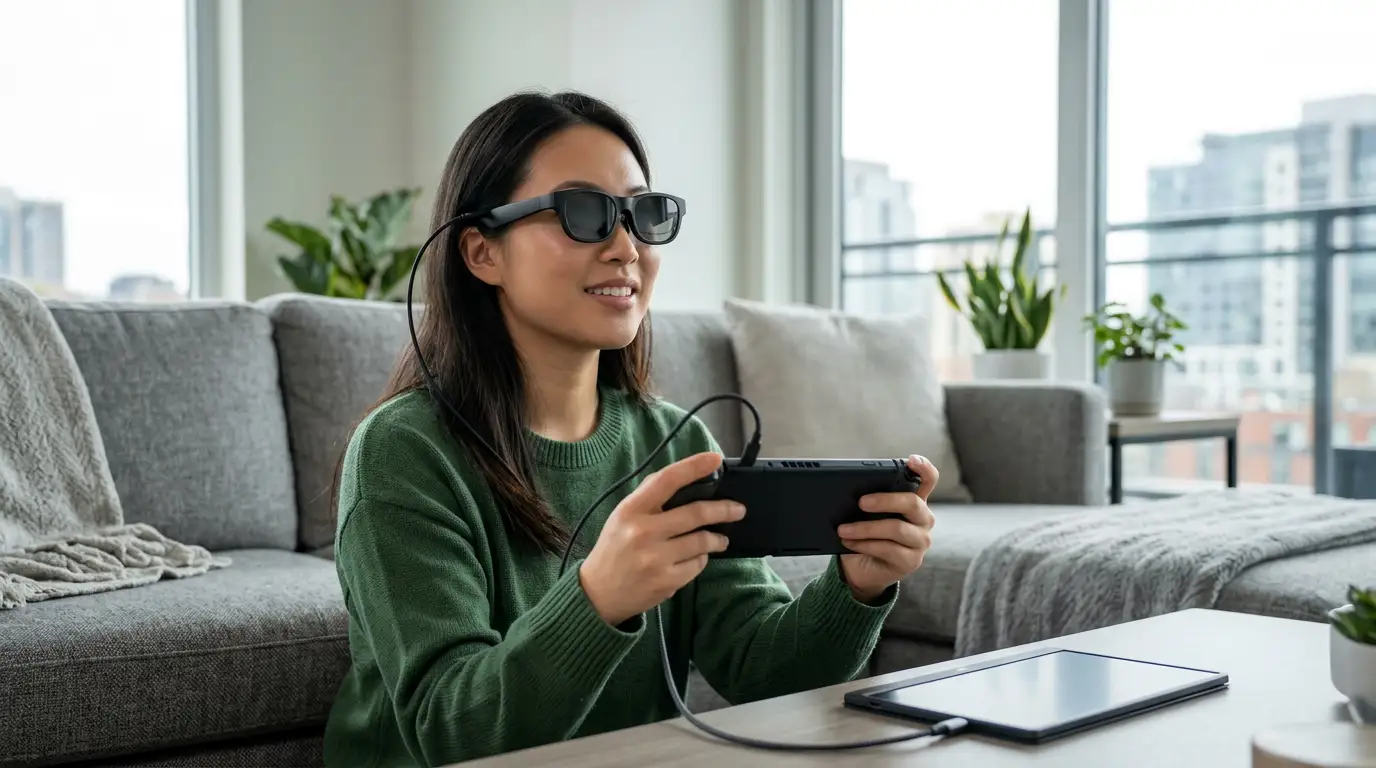
Delving deeper into the technology, augmented reality software plays a critical role in calibrating and stabilizing the visuals to ensure they remain aligned with your line of sight, irrespective of head movements or pose. This ensures a consistent and uninterrupted viewing experience, allowing you to fully immerse yourself in your game or content without the screen ghosting or veering off your field of vision.
For game developers, this new form translates into an exciting opportunity to rethink game design for spatial environments. Unlike traditional formats, developers can innovate with three-dimensional space and design concepts that take full advantage of the augmented field of vision, introducing gamers to a dynamic and interactive entertainment experience. In addition, the integration of spatial audio allows developers to craft soundscapes that enhance realism and engagement, adding layers of auditory experience that complement the visuals.
Moreover, an added consideration for these glasses is the impact on social interaction. Traditional gaming setups can often range from isolating experiences, but this innovative device allows users to interact with their environment and people around them without fully cutting themselves off. This means you can enjoy your gaming session while also remaining accessible for brief interpersonal interactions or necessary tasks, marking a significant improvement in balancing digital and real-world engagements.
Beyond gaming, the uses and applications for spatial audio glasses extend into various fields requiring large displays, such as virtual meetings, design work, and educational content. Their potential to revolutionize how we consume diverse digital content means that they stand as a versatile tool in modern digital consumption, adapting across professional and leisure use cases.
As the technology underpinning spatial audio glasses and portable displays continues to develop, we may witness a more profound change in how augmented and mixed reality experiences influence everyday consumer electronics. With the convergence of intuitive user design, portable connectivity, vivid projections, and immersive surround sound, these glasses mark a substantial leap forward in interactive media and personal entertainment. The possibility of enjoying a fully immersive large-screen experience, free from the confines of traditional displays, is now an exciting reality at our fingertips, signaling an adventurous frontier in entertainment technology.