In the ever-evolving landscape of human-computer interaction, a transformative technology is emerging that promises to redefine how individuals interact with their devices—Electromyography (EMG) wristbands. These innovative devices utilize the science of electromyography to interpret the minute electrical activities produced by muscle contractions, enabling users to control electronic devices with subtle finger movements rather than traditional voice or touch commands. The advent of EMG wristbands is paving the way toward a more seamless and intuitive user experience, potentially enhancing accessibility and efficiency across various applications.
At the heart of this groundbreaking technology is electromyography, a scientific technique concerned with the study and analysis of electrical signals that muscles generate when they contract. Typically, when a person intends to perform a physical action, like moving a finger, the brain sends an electrical signal through the spinal cord and peripheral nerves to excite the relevant muscle fibers. This excitation causes the muscle fibers to contract, which in turn produces a measurable electrical signal known as an EMG signal. By capturing and interpreting these signals from the forearm muscles, EMG wristbands can serve as a sophisticated interface between the human body and electronic devices.
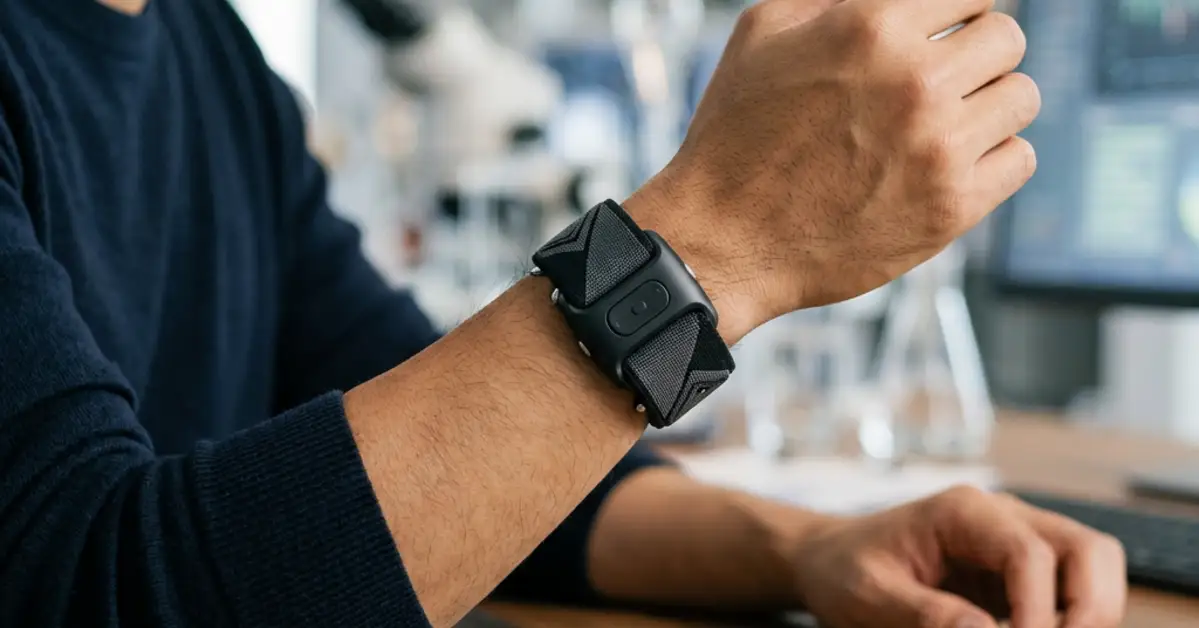
The core component of an EMG wristband is a set of sensors specifically designed to capture electrical signals directly from the surface of the skin. These sensors are typically non-invasive and sophisticated enough to discern patterns and intensities of electrical activity associated with various finger movements. Advanced algorithms process the captured signals to differentiate between distinct gestures, such as pinching, tapping, or swiping, effectively translating the electric impulses into inputs that electronic devices understand. By simply moving their fingers, users can issue commands to smart glasses, home automation systems, or other compatible devices without physically interacting with them.
The application of EMG wristbands can be particularly beneficial in scenarios where traditional input methods, like voice commands or touchscreens, may be impractical or less efficient. In environments where noise is unavoidable or speech recognition systems struggle to perform accurately, EMG-based controls offer a silent alternative. Additionally, for individuals with disabilities or limitations that inhibit verbal communication or precise touch interaction, EMG wristbands open new avenues for interaction and control, facilitating a more inclusive digital ecosystem.
When it comes to controlling devices such as smart glasses, EMG wristbands offer a natural and intuitive approach. Rather than relying on complex voice commands or external controls, users can navigate through interfaces, adjust settings, or select options by flexing their fingers in predefined patterns. This degree of control is facilitated by highly responsive sensors capable of capturing minute electrical signals, thereby offering precise control without undue strain or complication. By focusing on subtle gestures, users maintain a more natural posture, reducing the physical and cognitive load often associated with multitasking or managing wearable devices.
Interestingly, the use of EMG signals extends beyond traditional consumer electronics, offering value in fields such as robotics, prosthetics, and virtual reality (VR). In robotics, fine muscle control enabled by EMG signals can result in more agile and responsive movements, enhancing the interaction between humans and robotic assistants. For prosthetic limb users, EMG wristbands can convey movement intentions to artificial limbs with greater precision, improving functional capabilities and quality of life. In VR environments, EMG control provides greater immersion, allowing users to navigate simulated worlds with intuitive hand and finger movements, making the experience more dynamic and engaging.
One of the technical challenges that developers and engineers face is minimizing false positives and ensuring the reliable capture of EMG signals across different skin types, muscle conditions, and environmental noise levels. To address this, advanced filtering techniques and machine learning algorithms are employed to enhance signal clarity and recognition fidelity. By training algorithms with diverse datasets and continually refining the detection parameters, developers are making progress in ensuring that EMG wristbands perform reliably across a broad spectrum of users and conditions.
In addition to their functional capabilities, EMG wristbands can be elegantly designed to blend with everyday wear, making them suitable for continuous use. Advances in miniaturization and materials science allow these devices to be lightweight, comfortable, and unobtrusive, encouraging regular usage without compromising on style or convenience. This design paradigm shift reflects an industry-wide trend toward creating technology that integrates seamlessly into the user's life rather than demanding conscious attention or adjustment.
With these substantial benefits and ongoing developments, EMG wristbands exemplify the potential for muscle-signal technology to augment and elevate the interaction between humans and their digital environments. Whether enabling more accessible controls, enhancing the capabilities of wearable devices, or contributing to fields such as robotics and prosthetics, the utility and promise of EMG wristbands are undeniable.
While the technology is still in its relative infancy, continuous research and development endeavors signal a promising future. Technological advancements are likely to refine the accuracy and adaptability of EMG-based control systems, with potential implications extending across a wide array of industries and conventional use cases. Pioneering strides in this domain promise to unlock new realms of possibility, facilitating a more natural, responsive, and personalized interaction with the increasingly smart world around us.