In the modern educational landscape, where digital literacy is growing increasingly paramount, parents and educators frequently find themselves seeking a balanced approach. They want to ensure that children benefit from technological advancements without becoming overly reliant on screens. Enter the world of Tactile STEM — a burgeoning field that expertly melds classic play with modern innovation, creating learning environments that stimulate young minds without the need for mobile devices. One fascinating development in this area is the embedding of subtle sound and motion sensors directly into traditional building sets, transforming them into interactive tools that promote logical reasoning and problem-solving skills.
For years, classic building sets have been a staple in early childhood development, fostering creativity, spatial awareness, and fine motor skills. The resurgence of interest in these timeless toys has dovetailed beautifully with advances in technology, enabling the integration of sound and motion sensors that react to children's actions in real-time. Unlike traditional screen-based learning, these interactive blocks provide an immersive, tangible experience that captivates a child's imagination and curiosity.
Positioned at the intersection of play and learning, these innovative toys invite children to engage with complex concepts through simple actions. The use of sound and motion sensors adds layers to the building experience, allowing children to explore cause and effect. The blocks can chime or vibrate when placed correctly, providing immediate feedback and encouraging critical thinking. Children learn through trial and error, enhancing their problem-solving skills as they adjust their approach based on the sensory feedback they receive.
The benefits of such tactile learning experiences are multi-faceted. Children in early development stages thrive on hands-on activities that allow them to explore their environment and exercise their innate curiosity. These multisensory building blocks engage children holistically, appealing to both their kinesthetic and auditory senses. This form of engagement is particularly effective during break periods, like summer vacations, when academic activities typically pause. Utilizing these blocks, children can continue to indulge in educationally enriching play that builds fundamental STEM skills.
Furthermore, these tactile building blocks foster inclusivity by catering to a variety of learning styles. Visual, auditory, and kinesthetic learners can all find their strengths reflected in the use of such toys. Additionally, children with special educational needs can particularly benefit from the multisensory input that these blocks provide, aiding in skills such as focus and motor coordination.
Expanding on the technology itself, the sound sensors embedded in these blocks can play a variety of tones or even be programmed to follow patterns, helping children understand sequences and improve memory retention. Motion sensors, which detect movement and spatial changes, encourage children to experiment with cause and effect, paving the way for early development of logic skills. This hands-on, feedback-rich experience helps children internalize basic engineering principles, such as balance, symmetry, and structural integrity, as they build.
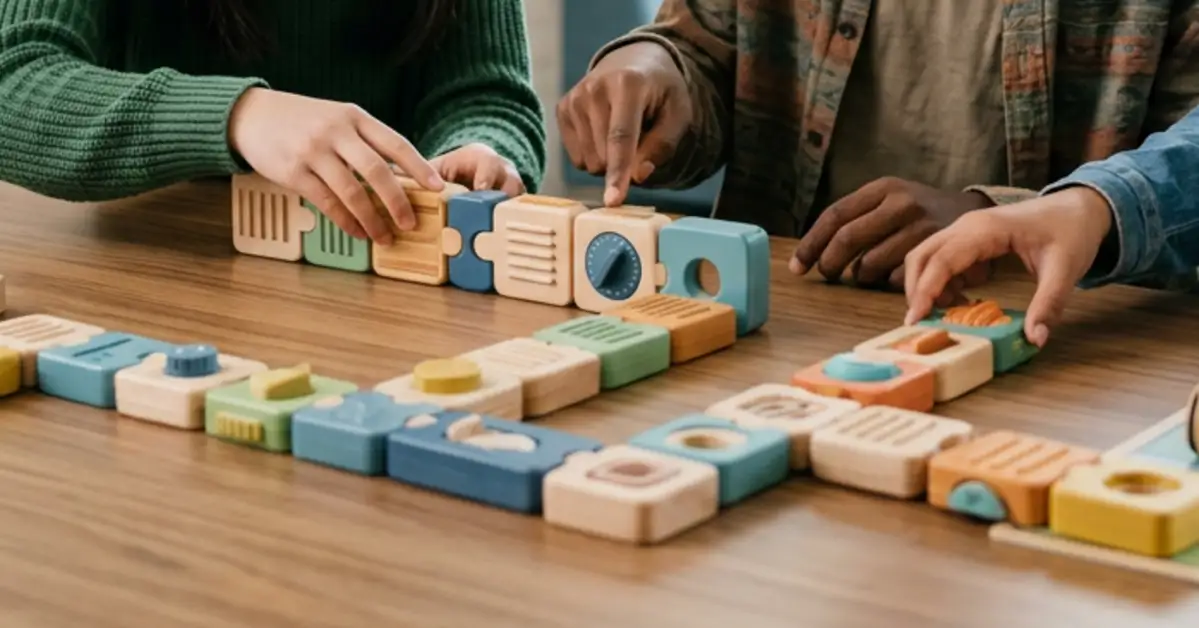
One key aspect of tactile STEM toys is their ability to bridge generational gaps in learning. While interactive building blocks represent a significant step forward technologically, they maintain the classic appeal of play shared by past generations. Parents and grandparents can easily join in the fun, building connections and facilitating intergenerational play and learning.
Moreover, these building sets aim to cultivate an intrinsic motivation within children to learn and explore. When children are actively engaged, their motivation stems from curiosity rather than external rewards. This self-driven learning sets the foundation for lifelong educational enthusiasm and the desire to approach complex problems analytically.
In addition to individual learning, these building blocks foster social development. Group play settings with these toys encourage cooperation, communication, and teamwork. Children learn to share ideas, negotiate roles, and collaborate towards common goals. Such scenarios help nurture essential life skills such as empathy, leadership, and conflict resolution.
It is also significant to address the environmental impact of these technologies. Many manufacturers are beginning to focus on sustainable materials and recycling options, ensuring that their products are environmentally friendly. As families become more eco-conscious, choosing toys that support the planet’s health becomes as important as choosing those that support children's educational development.
In summary, the integration of subtle sound and motion sensors into traditional building sets heralds a promising advancement in early childhood education. These tactile STEM toys encourage children to think critically and creatively while nurturing an enthusiasm for learning that goes beyond screens. As parents and educators look towards the future, they can rest assured that such innovations provide a balanced approach to child development—one that embraces the best of both the digital age and traditional play.
The rise of tactile STEM represents more than just a trend in educational toys; it embodies a paradigm shift towards interactive, off-screen learning. By providing children with the tools to explore the world in a hands-on, engaging way, we are preparing them for a future that celebrates creativity, innovation, and collaboration—without the distractions of screens.