As the automotive industry continues to evolve, the options available for consumers have expanded to include various types of hybrid and fully electric vehicles. Choosing between these two types can be challenging, particularly when considering the differences in technology, cost, environmental impact, and driving experience. This educational article aims to provide comprehensive insights into hybrid and fully electric vehicles, helping you make an informed decision as a car buyer in 2026.
Hybrid vehicles blend the features of a conventional internal combustion engine (ICE) with an electric propulsion system. There are several types of hybrids, such as mild hybrids, full hybrids, and plug-in hybrids (PHEVs). Mild hybrids use their electric motor to support the ICE during acceleration, enhancing fuel efficiency but cannot operate solely on electric power. Full hybrids, like the popular Toyota Prius, can run on petrol, electric power, or a combination of both. PHEVs come with a larger battery pack and the ability to be recharged via an external power source, allowing them to operate primarily on electric power for short distances.
Fully electric vehicles (EVs), on the other hand, forgo the traditional ICE entirely and rely exclusively on a battery-powered electric motor for propulsion. Advances in battery technology have led to significant improvements in range, performance, and charging time over the past years, allowing EVs to compete directly with their hybrid and ICE counterparts. The absence of an ICE also results in fewer moving parts, potentially reducing maintenance costs.
One of the primary considerations when comparing hybrids and EVs is the driving range. In 2026, hybrids continue to offer greater flexibility in range as they can switch between their ICE and electric power seamlessly. This means drivers can fill up at a gas station and continue their journey without concern for charging infrastructure availability. On the other hand, modern EVs boast impressive ranges, often exceeding 300 miles on a single charge, thanks to advancements in battery energy density. Additionally, the charging network has expanded significantly, with rapid chargers capable of replenishing a battery in under 30 minutes, reducing range anxiety for most scenarios.
The environmental impact is another crucial factor influencing the decision. Hybrids produce greenhouse gas emissions, although they are significantly lower than traditional ICE vehicles due to their ability to operate partially or primarily on electric power. Full EVs, however, produce zero tailpipe emissions, offering a more environmentally friendly alternative. Nonetheless, the overall environmental impact of an EV depends on the source of the electricity used for charging. Renewable energy sources such as wind or solar power can maximize the environmental benefits of EVs.
Cost is an essential consideration for many consumers. As of 2026, hybrids generally have a lower initial purchase cost compared to fully electric vehicles, partly due to the ongoing refinement and lower production costs of ICE components. However, the total cost of ownership could balance out over time, as EVs typically have lower fueling and maintenance costs. Government incentives for purchasing EVs may further alter the cost dynamics, depending on policies in various regions which aim to encourage the adoption of green technology.
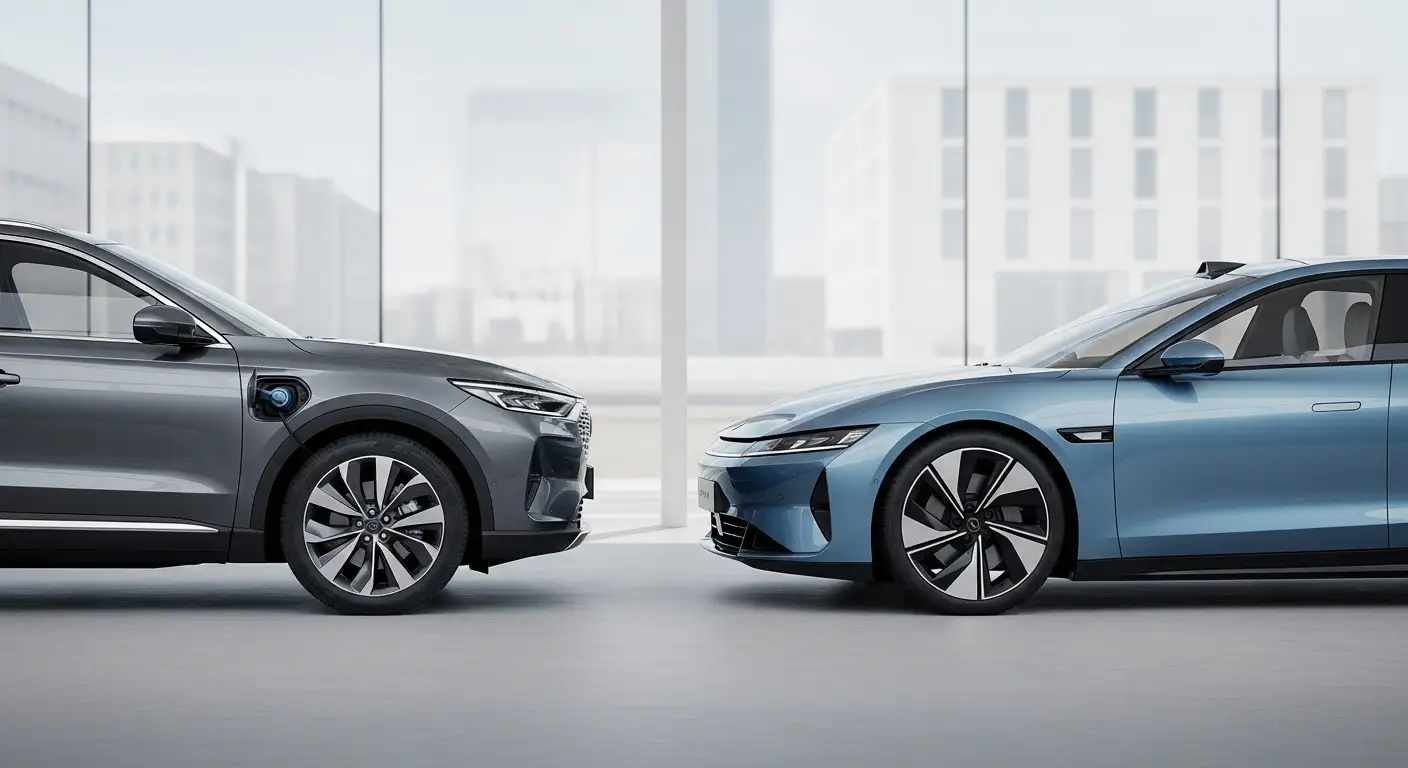
The driving experience also differs between hybrids and EVs. Hybrids often offer a smooth transition between electric and petrol power, usually imperceptible to the driver, resulting in a refined driving experience. Yet, the presence of an ICE and transmission means hybrids maintain elements of traditional vehicle dynamics. In contrast, EVs offer instant torque and a quiet, smooth driving experience due to their electric powertrain. The absence of engine noise and vibrations creates a unique, serene driving environment that many drivers find appealing.
Charging and refueling infrastructure is a vital aspect of considering a hybrid versus an EV. Hybrids do not require special infrastructure, as they can operate on conventional fuel. PHEVs can benefit from charging stations but are not solely dependent on them. EV owners, however, rely heavily on the availability of charging stations. By 2026, significant progress has been made in building comprehensive charging networks globally, encompassing fast chargers and more ubiquitous public charging solutions at commercial and residential properties. Home charging solutions further enhance EV convenience, allowing overnight charging without requiring visits to charging stations.
Resale value can vary depending on the specific hybrid or electric vehicle model and market maturity. Historically, hybrids have maintained their resale value fairly well, owing to their fuel efficiency and consumer familiarity. The resale market for EVs is becoming more stable as battery longevity increases and secondary markets become more adept at valuing used EVs. Consumers considering future vehicle purchases should take into account the depreciation rates which may affect their long-term financial planning.
Technological advancements also shape the decision between hybrid and fully electric vehicles. Both options come with advanced technological features such as regenerative braking, energy recovery systems, and sophisticated infotainment systems. EVs, however, often serve as platforms for cutting-edge technology integration due to their electronic architecture and emphasis on future-proofing. This can include features such as sophisticated autonomous driving systems, smarter energy management, and integration with other smart devices and networks.
Ultimately, choosing between a hybrid and a fully electric vehicle involves evaluating multiple factors that align with personal preferences, lifestyle needs, and environmental considerations. While hybrids offer a blend of electric and fuel efficiency with extended range capabilities, fully electric vehicles promise a cleaner driving experience and the convenience of home charging. Advances in both sectors are expected to continue, leading to more diverse and efficient vehicle options by 2026.
As a prospective buyer, it's beneficial to assess your driving habits, access to charging infrastructure, budget, and commitment to reducing carbon footprints when deciding between a hybrid or a fully electric vehicle. With a better understanding of these key differences, you can make an informed choice that suits your personal needs and values while contributing to a sustainable future in automotive transport.